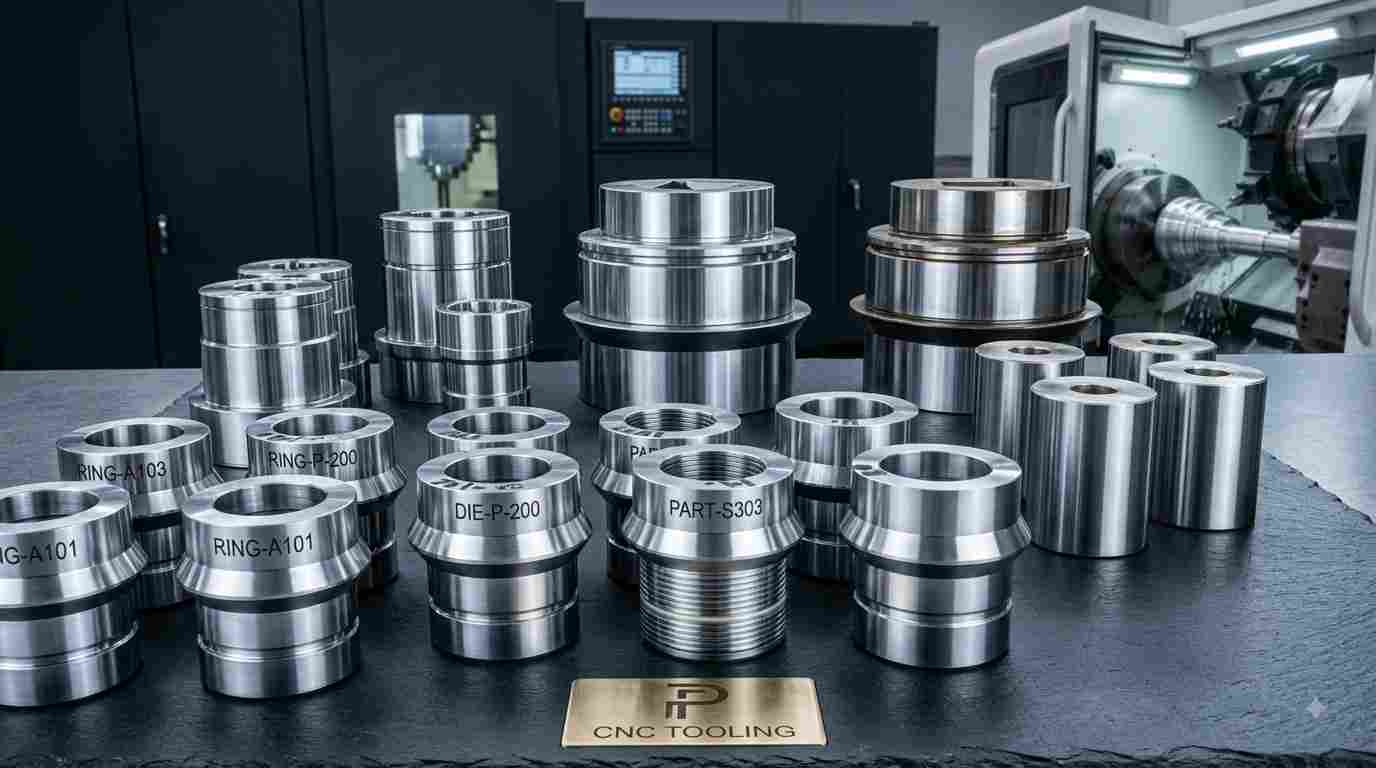
Modern industrial manufacturing relies heavily on precision-turned components. Whether producing critical aerospace fasteners, medical shafts, or custom automotive fittings, selecting a qualified CNC lathe machining service determines both product performance and overall project cost-efficiency. High-precision lathe operations demand an advanced machine fleet, rigorous quality control protocols, and deep metallurgical expertise.
CNC (Computer Numerical Control) lathe machining is a subtractive manufacturing process where a cylindrical workpiece rotates at high speeds while stationary cutting tools shape the material. Guided by pre-programmed G-code instructions, the lathe removes excess material to create symmetrical, highly accurate cylindrical parts.
Unlike traditional milling where the tool rotates against a fixed workpiece, turning rotates the part itself. This fundamental difference makes CNC lathes the ideal choice for producing round profiles, concentric bores, external threads, tapers, and precision grooves with exceptional radial accuracy.
High-end CNC turning centers achieve dimensional accuracy down to sub-thousandth-of-an-inch ranges (often within ±0.0002 inches or ±0.005 mm). Achieving these tolerances consistently requires careful control over several factors:
Spindle Stability and Rigidity: Heavy-duty lathe beds constructed from cast iron absorb cutting vibrations, preventing chatter marks on turned surfaces.
Thermal Management: Continuous high-speed friction generates heat that can expand metal workpieces. Advanced lathes utilize flood coolant systems and temperature-compensated spindles to maintain dimensional stability during long production runs.
Tooling Selection: Utilizing premium carbide, ceramic, or cubic boron nitride (CBN) inserts ensures sharp cutting edges that yield smooth surface finishes (often reaching Ra 0.8 µm or finer) without requiring secondary grinding operations.
Modern CNC lathes have evolved far beyond basic 2-axis turning. Multi-axis turning centers integrated with "live tooling" capabilities combine lathe operations with milling functionality on a single machine setup:
Live Tooling: Driven rotary tools installed directly on the lathe turret allow the machine to drill cross-holes, mill flat keyways, engrave serial numbers, and tap off-center threads while the main spindle holds the part stationary or indexes it precisely.
Multi-Tasking Efficiency: Performing turning and secondary milling operations in a single machine cycle eliminates the need to manually transfer parts between a lathe and a milling machine. This drastically reduces fixture setup time, minimizes human handling errors, and ensures true geometric alignment across all features.
A capable CNC turning facility handles a wide spectrum of engineering materials, adapting cutting speeds and feed rates to match material hardness:
Engineering Metals: Includes stainless steels (304, 316, 17-4 PH), alloy steels, brass, copper, titanium, and lightweight aluminum alloys.
Engineering Plastics: Machinable polymers such as PEEK, PTFE, Nylon, and Delrin require specialized sharp tooling to prevent heat deformation during rapid cutting.
Design for Manufacturability (DFM) Tips
To optimize manufacturing efficiency, engineers should design turned parts with standardized thread sizes, avoid unnecessarily deep internal bores that require long tool overhangs, and include generous relief grooves where threads meet shoulders.
Partnering with a reliable manufacturing supplier means verifying their quality control infrastructure. Leading machine shops utilize Coordinate Measuring Machines (CMM), optical shaft measurement systems, and surface roughness testers to verify batch consistency before dispatch.
When sourcing specialized components for demanding North American markets, partnering with an experienced supplier for precision CNC lathe machining services for custom components ensures high repeatability, strict quality compliance, and reliable lead times from prototype to high-volume production.