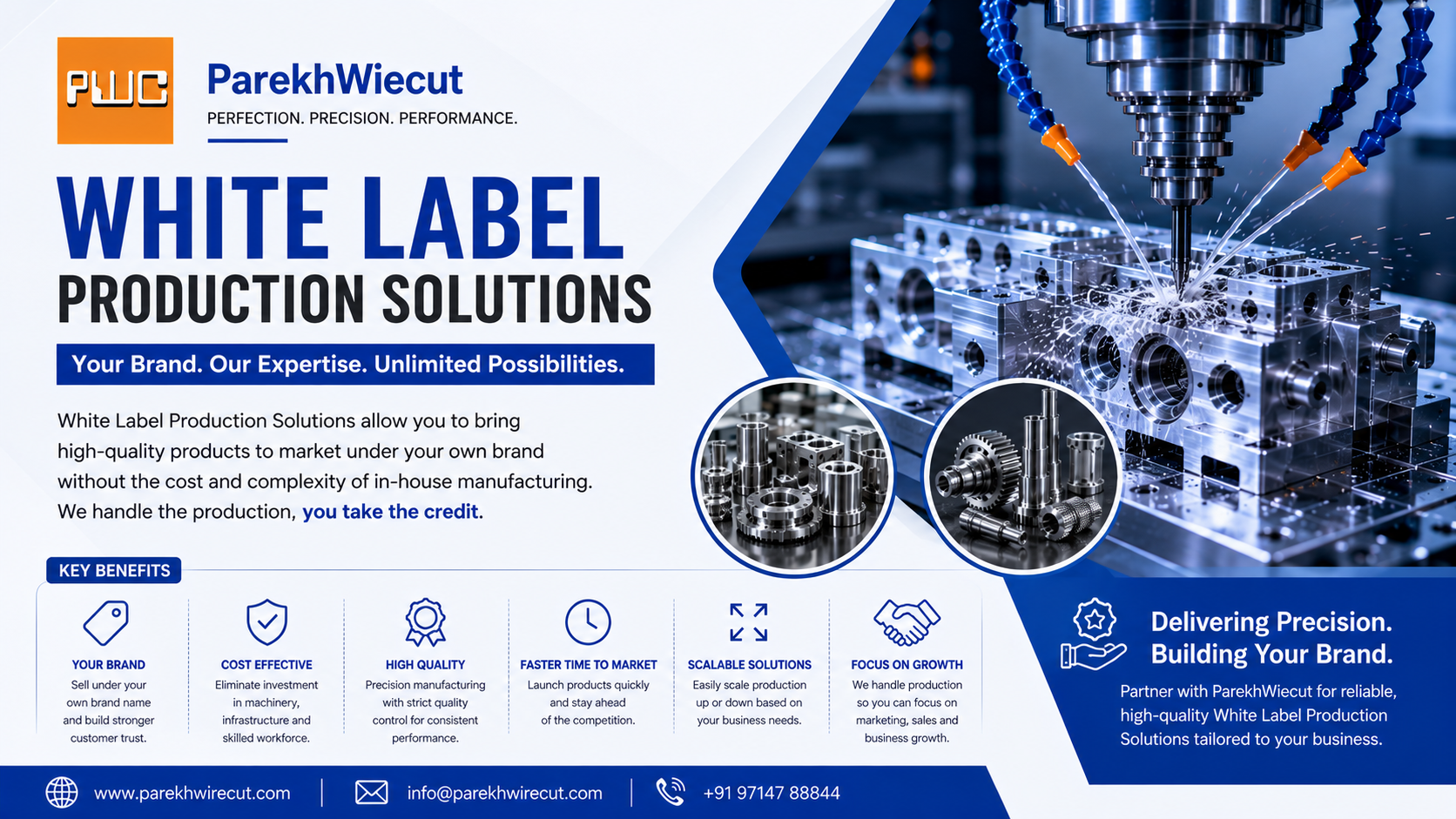
In today’s competitive market, businesses are under constant pressure to deliver quality products faster, reduce operational costs, and stay ahead of changing customer demands. Managing everything in-house is no longer practical for many companies, especially when production, technology, and skilled labor require heavy investment. This is why more brands are turning toward white label production solutions.
From manufacturing industries to digital services, white label production has become a smart strategy for companies looking to scale efficiently without compromising quality. Businesses can focus on branding, customer relationships, and market expansion while experienced production partners handle the technical work behind the scenes.
Companies like Parekh Wire Cut are helping businesses streamline production with precision-driven manufacturing solutions that support consistent quality and faster delivery timelines.
White label production refers to a business model where a specialized company manufactures products or provides services that another business sells under its own brand name. Instead of investing in machinery, infrastructure, production teams, and operational management, businesses outsource the production process to experts.
This approach allows companies to launch products quickly while maintaining their brand identity in the market. It also helps businesses reduce the risks associated with manufacturing and production management.
For industries dealing with precision engineering, extrusion dies, cutting dies, and industrial tooling, partnering with experienced manufacturers can make a significant difference in quality and performance.
Modern customers expect quick delivery and continuous product availability. Businesses that fail to respond quickly often lose opportunities to competitors.
Building an in-house production setup takes time, money, and long-term operational planning. White label production offers a faster alternative. Companies can introduce new products without waiting months for manufacturing facilities or workforce training.
This flexibility is one of the biggest reasons businesses are adopting outsourced production partnerships. It helps brands respond quickly to market trends and customer demands without slowing down operations.
Production infrastructure requires significant investment. Machinery, maintenance, labor costs, quality testing, and raw materials can create financial pressure, especially for growing businesses.
White label production helps reduce these overhead costs. Instead of purchasing expensive equipment and maintaining a large workforce, businesses can collaborate with experienced production companies that already have the required infrastructure.
Professional manufacturers follow industry standards and use advanced technology to maintain consistency in every project. This gives businesses access to high-quality production without large capital investments.
For precision manufacturing industries, companies often prefer experienced production specialists because accuracy and reliability directly impact product performance.
Managing production internally often takes attention away from sales, branding, and customer service. White label partnerships allow businesses to focus on core growth activities while production experts handle manufacturing operations.
This shift improves overall efficiency. Marketing teams can concentrate on customer acquisition, while production specialists ensure timely manufacturing and quality control.
Many successful brands today operate using this model because it creates better workflow management and improves business scalability.
Production quality depends heavily on technical expertise and advanced machinery. Building this capability internally requires years of experience and continuous investment.
White label production companies already possess industry knowledge, trained professionals, and specialized equipment. Businesses benefit from this expertise without going through the lengthy process of building technical departments from scratch.
In industrial manufacturing, precision tooling and die manufacturing require advanced engineering skills. Experienced manufacturers understand the technical standards needed to maintain performance, durability, and accuracy.
Businesses partnering with trusted companies gain access to better production capabilities while maintaining operational efficiency.
One major challenge businesses face is scaling production during periods of growth. Expanding in-house manufacturing requires additional machinery, warehouse space, and manpower.
White label production provides flexibility. Businesses can increase or decrease production volumes based on market demand without major infrastructure changes.
This scalability helps businesses avoid unnecessary operational risks. During peak demand periods, production can be expanded quickly without affecting delivery schedules.
For growing brands, this flexibility becomes a major advantage in maintaining customer satisfaction and business stability.
Customers expect consistency from brands. Poor quality can damage business reputation and reduce customer loyalty.
Professional white label production companies follow structured quality control processes to maintain consistent output standards. This helps businesses deliver reliable products to customers under their own brand name.
Consistency is especially important in industries involving industrial tooling, metal cutting, extrusion dies, and precision engineering where even small manufacturing errors can affect overall performance.
Reliable manufacturing partners help businesses maintain trust, improve customer satisfaction, and strengthen brand value in the market.
Manufacturing operations involve multiple risks, including equipment breakdown, labor shortages, raw material issues, and compliance management.
White label production helps reduce these operational burdens. Production responsibilities are managed by experienced partners who understand industry regulations and manufacturing challenges.
This reduces pressure on businesses and allows them to operate with better financial predictability.
Instead of worrying about machinery maintenance or production delays, companies can focus on building stronger customer relationships and expanding into new markets.
Launching new products often requires experimentation, prototyping, and technical expertise. White label production partners can support businesses during product development and testing stages.
This makes it easier for companies to introduce innovative products without investing heavily in internal R&D infrastructure.
Businesses can explore new opportunities while relying on experienced manufacturers for technical support and production management.
The success of white label production depends on selecting the right manufacturing partner. Businesses should look for companies with proven industry experience, modern infrastructure, quality-focused processes, and transparent communication.
A reliable production partner helps businesses maintain consistency, improve efficiency, and build long-term market credibility.
Parekh Wire Cut has established itself as a trusted name in precision manufacturing solutions by delivering quality-focused production services tailored to industrial requirements. Their expertise in extrusion dies, cutting dies, stamping dies, and precision tooling supports businesses looking for dependable manufacturing partnerships.
White label production solutions are no longer just an option for large corporations. Businesses of all sizes are adopting this model to improve efficiency, reduce operational costs, and scale faster in competitive markets.
As industries continue evolving, companies that focus on flexibility, quality, and strategic partnerships will be better positioned for long-term growth.
By collaborating with experienced production experts, businesses can strengthen their market presence, improve customer satisfaction, and stay focused on innovation and expansion without the burden of managing complex production systems internally.